Watercolor Rose Illustration: Graphics for Handmade Crafting
First Impressions of a Soft, Floral Design Asset
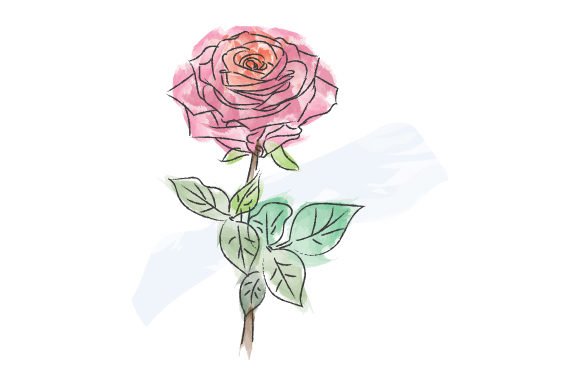
When I opened the download and saw the rose illustration for the first time, I immediately pictured a line of spring tea towels, delicate wedding favor tags, and a soft blush-toned tumbler wrap. The watercolor style isn’t heavy or overly bold – it feels like a gentle wash of color that would appeal to buyers who love vintage garden parties, bridal shower keepsakes, and feminine handmade gifts. The petals have a subtle transparency that truly mimics real watercolor, and the overall silhouette reads as a classic rose without being too rigid or symmetrical. That organic quality makes it stand out from flat vector clipart and gives it a premium, almost hand-painted presence.
As someone who designs printable wall art, sticker sheets, and custom Cricut projects for my Etsy shop, I’m always looking for graphics that feel authentic and don’t scream “digital clipart.” This illustration does exactly that. It suggests a quiet, elegant mood – not rustic barn, not corporate minimal, but something in the realm of shabby chic, garden romance, and soft feminine branding. I can already see it bringing a cohesive look to a set of printable greeting cards, planner stickers, and matching thank-you notes for a small business owner who wants her packaging to feel curated.
Mood and Style: What Kind of Handmade Buyer Will It Attract?
This watercolor rose graphic leans decidedly toward the elegant, romantic, and slightly nostalgic. If you sell to brides, baby shower planners, gift shops, or customers who love soft botanical themes, this illustration will speak directly to their taste. It’s not playful or cartoonish, so it won’t work for a children’s birthday theme, but it’s perfect for Mother’s Day keepsakes, sympathy cards, and personalized memorial products. The softness of the watercolor effect also makes it a natural fit for wellness brands, bath product labels, and boutique candle packaging.
For Etsy sellers and craft fair vendors, the illustration can act as a quiet signature element. Imagine a table display where every product – from tote bags to glass canisters – carries the same gentle rose motif. That consistency helps build a recognizable brand identity quickly. The asset feels mature and intentional, so it lifts the perceived value of the finished product, whether that’s a $5 sticker or a $35 custom mug.
Real Crafting Uses: Where This Rose Shines
I tested the design in my usual workflow, placing it on mockups for several products I regularly make for my shop and local orders. Here’s where it fits naturally and sells well.
Cricut and Silhouette Projects
The SVG format included in the file is clean and easy to import into Cricut Design Space or Silhouette Studio. The path is properly closed, and the cut lines follow the contour of the petals without jagged edges, which is critical for vinyl cutting. I’d use this for heat transfer vinyl on a cotton tote, a single-color decal for a laptop, or a layered vinyl project where I separate the leaves and petals into distinct colors. For adhesive vinyl, the design is detailed enough to look intricate but not so fine that it weeding becomes a nightmare. I did notice that the very thinnest watercolor splatters around the edges might be too delicate for permanent vinyl on textured surfaces, so I’d simplify those if I were cutting at a small size. For a standard 12x12 stencil or a larger wall decal, the rose holds up beautifully.
Sublimation and Print-on-Demand
As a printable design, the PNG exports with a transparent background, which is essential for sublimation. I placed the rose on a white ceramic mug, a blush pink tumbler wrap, and a soft gray t-shirt – the transparency allowed the watercolor edges to blend naturally, avoiding that harsh “sticker” look. The high resolution of the original illustration means I can enlarge it for a full-wrap mug without losing the delicate wash effect. For print-on-demand, it’s a reliable graphic to use as a focal point or as a repeating accent motif along the hem of a shirt or the side of a notebook.
Stickers, Greeting Cards, and Paper Goods
This is where the watercolor rose truly becomes a revenue driver. I immediately designed a set of six note cards, each featuring the rose in a slightly different position, and paired them with a simple script font. The result looked like a boutique stationery line. For sticker sheets, I resized the rose to about 1.5 inches and added a few of the smaller leaf elements from the illustration – the PNG resolution kept everything crisp. The soft pastel tones would also translate well to wedding invitation suites, save-the-date magnets, and program covers.
Personalized Gifts and Seasonal Collections
I’m planning a Mother’s Day collection where the rose appears on a custom jewelry dish, a linen pillow cover, and a set of handmade soap labels. Because the watercolor effect is so forgiving, it works beautifully on natural materials like linen and kraft paper. It also pairs well with foil accents – I can imagine a gold foil “Mom” script layered over the rose on a printable design. For Christmas, I’d tint the rose a deep cranberry and use it on gift tags and fabric ornaments. The style is flexible enough to color-shift for different seasons without losing its character.
Where You Should Use It with Extra Care
No design asset is perfect for every project, and this one does have a few practical limits every crafter should know before cutting.
- Very small details: Some of the loose watercolor splatters and thin petal edges might not cut cleanly on a fine-point blade if you shrink the rose below 1 inch. For tiny stickers or earring designs, I’d remove the outer splatters and use only the solid rose body.
- Low-contrast backgrounds: On a dark or busy background, the soft wash can lose its definition. Always test a print on the actual material – a navy tote bag might swallow the lighter petals unless you add a white outline or use a light-colored substrate.
- Layered vinyl with multiple colors: The watercolor variation means there’s no clear separation between shades. If you need a crisp, two-color vinyl design, you’ll need to manually trace the rose into solid blocks, which loses the painterly charm.
- Small-press sticker sheets: If you’re printing kiss-cut stickers on a home printer, the rose’s subtle color transitions might appear muddier than on screen. Always test on your specific printer and paper before committing to a full batch.
Practical Checks Before You Sell What You Make
I never trust a graphic right out of the folder without running my own quality checks. Here’s what I did with this particular illustration, and what I recommend you do before you list a finished product.
- Check the SVG lines – Open the file in your cutting software and look at the nodes. Are they smooth? Are there any stray open paths? This one was clean, with no unnecessary compound paths.
- Preview the PNG at full size – Zoom in to 200% and check the edges of the watercolor wash. Any pixelation will show up on a tumbler wrap. This file had a soft, translucent edge that looked realistic, not digitally ragged.
- Test colors on different substrates – Print a test swatch on white cardstock, cream paper, and a cotton surface. The rose’s pinks and greens shifted predictably but stayed attractive across all three.
- Place it on real product mockups – I dropped the design onto a mug mockup, a tote bag image, and a greeting card template. Seeing it in context immediately revealed which products it elevated and which ones felt awkward. The mockup test is non-negotiable.
- Resize and test cut – I cut the rose at 2 inches, 3.5 inches, and 5 inches from adhesive vinyl. At 2 inches, the watercolor splatters weeded with some difficulty; at 3.5 inches and above, everything released cleanly.
How the File Formats Support Your Workflow
The download includes a well-organized set of file types that cover the most common crafting and small business software. The SVG 1.1 format is the one I reach for first – it’s the standard for Cricut and Silhouette, and it imported without any scaling issues. The AI 10 format is useful if you work in Adobe Illustrator and want to tweak the colors or combine the rose with other vector elements for a design bundle. The EPS 10 file is the universal vector safety net; it opens in CorelDRAW, Affinity Designer, and older software, which matters if you’re collaborating with a print shop. I also appreciate that the transparent PNG is extracted at a high resolution suitable for sublimation print files and digital product mockups.
Font Pairings That Bring the Rose to Life
Because the illustration is soft and flowing, the typeface you choose makes a huge difference. I tested a few combinations on a sample greeting card and can confirm these work beautifully:
- Script and handwritten fonts – A modern calligraphy font with light upstrokes echoes the watercolor’s elegance. Perfect for wedding stationery.
- Serif fonts – A delicate serif (like a Garamond or Bodoni) adds a timeless, literary feel. Great for poetry prints or botanical tags.
- Sans serif fonts – A clean, thin sans serif can create a modern botanical brand look, especially for bath product labels.
- Display fonts – Use sparingly, but a vintage serif display font can work for a romantic craft fair sign.
I’d avoid heavy, chunky fonts because they compete with the airy quality of the rose.
Using This Illustration for a Cohesive Handmade Brand
If you’re building a small business identity around a single motif, this watercolor rose can be the anchor. I’ve used it as a logo accent on a small shop’s thank-you cards, as a repeating pattern on packaging stickers, and as the hero image on the shop’s Etsy banner. Because the style is recognizable but not overly trendy, it won’t date your brand quickly. You can pull the rose into sublimation designs for apparel, use it on product care cards, or place it subtly on a hang tag. The graphic becomes a quiet thread that ties your entire product line together, which is exactly what a handmade business needs to feel professional and intentional.
Commercial Licensing and Selling with Confidence
Before you place this rose on a single product for sale, confirm the commercial license terms that came with the file. Most graphic design assets in this category allow use on physical products you sell, but some limit the number of units or require an extended license for print-on-demand platforms. I always read the included license document carefully, and I keep a copy in my business folder. If you plan to sell the design as part of a design bundle or as a standalone digital product, you’ll need to check whether the license allows for resale in that way – many do not. For typical Etsy product listings, craft fair inventory, and small-batch handmade goods, the standard commercial license is usually sufficient, but never assume.
Final Thoughts from a Maker’s Perspective
This watercolor rose illustration is a quiet workhorse for anyone who creates soft, romantic, or botanical handmade items. It’s not a loud, attention-grabbing graphic, but in the right product lineup, it becomes the reason a customer picks up your item. The file quality is solid, the vector formats are reliable, and the transparent PNG is ready for sublimation and printable design projects. I’ve used many floral clipart sets that looked promising on screen but fell apart during cutting or printing; this one held up across vinyl, paper, and fabric tests. For crafters who want to add a gentle, elegant floral to their shop offerings, this is a graphics asset worth downloading and keeping in your regular crafting library.