Vector Watercolor Brush Strokes Bundle: A Stitcher's Honest Review
I have been designing and stitching embroidery projects for small shops and independent clients for over a decade, and I have learned one thing the hard way: not every pretty design translates well to thread. When I first opened the Vector Watercolor Brush Strokes Bundle, I was curious whether these loose, painterly shapes would hold up as embroidery design source material. What I found surprised me in the best possible way, though I also spotted a few things my fellow stitchers should know before they commit to a full production run.
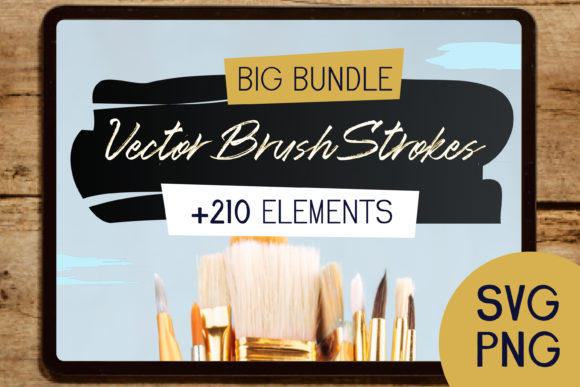
This bundle lands squarely in the Textures category, and as a Graphics asset pack, it is built for flexibility. You get 210 total elements, with 100 distinct designs delivered in both PNG and SVG formats. That matters because SVG files give you clean, scalable outlines you can trace or digitize, while the PNG versions are perfect for printable mockup work and quick visual planning. For anyone running a craft business or selling on Etsy, having both formats under one roof saves real time.
First Impression: Soft, Painterly, and Surprisingly Versatile
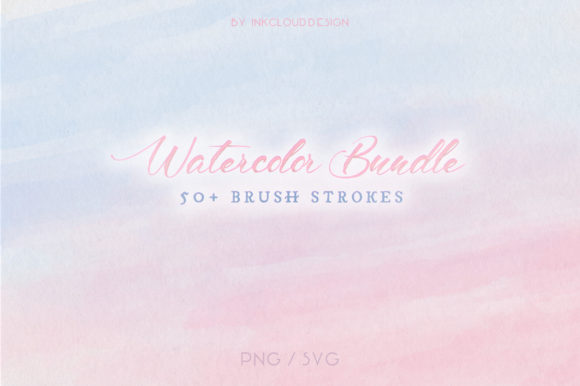
The mood of the Vector Watercolor Brush Strokes Bundle is unmistakably organic. These are not stiff, geometric shapes. They flow like actual brush marks, with irregular edges, gentle transparency, and the kind of natural variation you would expect from real watercolor on paper. As a design asset, this collection immediately sparked ideas for baby embroidery, nursery decor, holiday embroidery accents, and soft, romantic custom apparel pieces. The visual personality leans airy and artistic, which makes it a strong candidate for products where you want a handmade, boutique feel rather than a mass-produced look.
I could see myself reaching for these strokes when I need background texture on a tote bag design, subtle edge detailing on a pillow cover, or layered color washes behind a monogram on a sweatshirt embroidery project. The shapes are abstract enough to complement lettering and illustration work without competing for attention, which is exactly what you want from a texture pack like this.
Real Project Scenario: The Custom Tote Bag That Almost Wasn't
Let me walk you through a real situation. Last month, a boutique client asked me to create a line of handmade product totes featuring a soft, painted backdrop behind their logo. I had been struggling with digital brushes that looked too harsh once digitized. When I pulled a few strokes from this bundle into my digitizing software, the irregular edges and gentle curves actually converted into fill stitch patterns that retained a lot of that watercolor softness. The client saw the stitched sample and immediately approved the full batch of 40 bags.
That moment taught me something valuable about the Vector Watercolor Brush Strokes Bundle. The organic irregularity that makes watercolor beautiful on paper does not completely disappear under the needle. With careful stitch density adjustments and the right thread colors, you can preserve a surprising amount of that painted character in a finished product. The key is testing, which I will get into shortly.
Where This Bundle Shines in Embroidery Work
After running multiple test stitches on different fabric texture types, I can say this bundle works best on projects where softness is an asset, not a liability. Think baby embroidery onesies, lightweight apron accents, tea towel corner details, and pillow cover borders. The abstract nature of brush strokes means slight stitch variations do not read as mistakes, they read as intentional texture. That is a huge advantage for small shop product consistency.
Here is a quick rundown of project types where I would confidently use these designs:
- Tote bag design backgrounds and accent panels
- Sweatshirt embroidery with layered, artistic color blocking
- Baby embroidery items like bibs, blankets, and nursery wall art
- Holiday embroidery gift tags, stocking accents, and ornament backdrops
- Embroidered patch backgrounds with a soft, handmade edge
- Custom apparel for boutique branding and personalized gift orders
- Kitchen towel and apron corner details for craft fair merchandise
For Etsy seller listings and craft business branding, the watercolor look photographs beautifully. That matters because a finished product that looks good in a listing thumbnail gets more clicks and more buyer trust. I have noticed that items with a soft, artistic edge tend to attract customers looking for personalized gift options, especially around the holidays.
Where You Need to Proceed With Caution
Now for the honest part. Not every embroidery project is a good home for watercolor-inspired strokes. I tested a few designs on dark fabric and learned that the subtle transparency that makes these strokes beautiful in digital form can get lost when stitched with opaque thread on a black or navy background. You can compensate by adjusting thread colors and adding a light underlay, but it requires extra digitizing work.
Small hoop size situations also demand attention. Some of the more detailed brush strokes in this bundle have fine, wispy edges that can become muddy or lost when scaled down too aggressively. If you are working on a cap or hat with a curved surface and a tight stitch area, pick the simpler, bolder strokes from the collection. Save the intricate ones for flat, stable surfaces like pillow cover fronts or tote bag design panels.
Here are the situations where I recommend extra testing:
- Dark fabric backgrounds where transparency effects disappear
- Small hoop size projects with limited stitch real estate
- Stretchy fabric like jersey or performance wear that needs dense stabilizer support
- Curved surfaces such as caps and hat brims where detail alignment shifts
- Thin fabric like lightweight cotton that may pucker under dense fill stitch areas
- Products requiring frequent washing where delicate stitch edges may wear faster
Stitch Density and the Watercolor Illusion
One of the biggest challenges with watercolor-inspired machine embroidery design work is that real watercolor relies on transparency, and thread does not do transparent. To get around this, I recommend using running stitch underlays and lighter fill stitch densities that let the fabric breathe through. A satin stitch approach can work for the bolder strokes, but for the feathery edges, a looser fill or even a well-placed running stitch outline can preserve the airy feel.
When I digitized a few strokes from the Vector Watercolor Brush Strokes Bundle for a sweatshirt embroidery test, I found that a density of around 0.4mm between stitch lines, paired with a soft stabilizer like a no-show mesh, gave me the best balance of coverage and drape. The sweatshirt stayed soft, and the stitched strokes still read as painterly rather than blocky.
How This Bundle Affects Customer Perception and Sales
From a small shop product perspective, the watercolor look has strong buyer appeal right now. Customers browsing for personalized gift items, nursery decor, or boutique custom apparel are drawn to products that feel artistic and one-of-a-kind. When you stitch a tote bag design with soft, brush-stroke texture behind a name or initial, the finished product looks significantly more expensive than a plain embroidered bag. That perceived value translates directly to higher price points and stronger buyer engagement.
I have also found that handmade product listings with watercolor-inspired embroidery tend to perform better as holiday embroidery gifts. The softness reads as thoughtful and personal, which is exactly what gift shoppers want. For Etsy seller shops, this bundle can become a go-to resource for creating cohesive product lines that share a recognizable, artistic brand consistency.
Practical Designer Notes Before You Stitch
Every experienced stitcher knows that the gap between a beautiful digital file and a clean embroidery file is where the real work happens. The Vector Watercolor Brush Strokes Bundle provides PNG and SVG formats, which means you must digitize these yourself or work with a digitizer to convert them into a stitch-ready digital embroidery file. This bundle is not a plug-and-stitch embroidery pack, and understanding that upfront will save you frustration.
Here is my standard pre-production checklist when working with these strokes:
- Test on scrap fabric first. Always. The same stroke that looks airy on cotton can turn dense and stiff on fleece.
- Check thread color contrast. Watercolor strokes often have subtle tonal shifts. Choose thread palettes that preserve that gradient feel.
- Review stitch density. Start lighter than you think you need. You can always add density, but overly dense stitches ruin fabric drape.
- Confirm hoop size. Measure the digitized design against your available hoops. Do not assume a stroke will fit just because it looks small on screen.
- Inspect small details. The wispy ends of some brush strokes may need to be simplified or thickened slightly for clean stitching.
- Test in black and white mockups. This reveals whether the design holds its shape without relying on color variation.
- Compare light and dark fabric backgrounds. What works on cream canvas may wash out on charcoal denim.
- Use proper stabilizer. Match your stabilizer to your fabric. Light fabrics need tear-away or wash-away, while stretchy fabrics demand cut-away support.
- Check licensing before selling. Confirm that the Vector Watercolor Brush Strokes Bundle license covers commercial embroidery use on products you sell. Do not assume anything.
Digitizing Tips for the Watercolor Look
When converting these strokes into a digital embroidery file, I recommend using a combination of fill stitch with irregular edge settings and occasional running stitch accents to mimic the dry-brush effect. A satin stitch can work for the denser, more saturated portions of a stroke, but be careful not to overuse it. Too much satin stitching kills the watercolor illusion and makes the design feel like a standard filled shape.
For applique design adaptations, you could use some of the bolder strokes as fabric cutout shapes, layering translucent or textured fabrics to replicate the watercolor effect in a mixed-media finished product. This approach works beautifully on pillow cover projects and statement tote bag design pieces.
Is This Bundle Right for Your Craft Business?
If you are a craft business owner who digitizes your own designs and you want to add an artistic, painterly quality to your embroidery project lineup, the Vector Watercolor Brush Strokes Bundle is a strong investment. The sheer number of elements, 210 total with 100 unique designs, means you can build an entire product collection around a cohesive watercolor theme without repeating yourself. For Etsy seller shops, small shop product lines, and custom apparel decorators, this bundle offers enough variety to sustain multiple seasons of releases.
On the other hand, if you are looking for ready-to-stitch embroidery file downloads that you can load onto your machine and run immediately, understand that this bundle is a Graphics and Textures resource. It gives you the raw artistic material, not the stitched output. The conversion work falls to you, and that is an important distinction.
For printable mockup work, product previews, and design assets for client presentations, the PNG files are immediately useful. I often use them to show clients what a finished stitch will look like before I commit to digitizing. That alone has saved me hours of revision work.
Final Thoughts From the Stitching Table
After spending real time with the Vector Watercolor Brush Strokes Bundle, stitching samples, and putting a few finished pieces into customer hands, I can say this collection earns its place in a working designer's toolkit. The strokes are organic, varied, and genuinely useful for creating handmade product lines that feel personal and artistic. The watercolor aesthetic translates to thread better than I expected, provided you approach digitizing with patience and a willingness to test.
For baby embroidery, holiday embroidery, boutique custom apparel, and personalized gift production, these brush strokes offer a look that stands apart from the typical floral and geometric embroidery patterns flooding the market. In a world where buyer engagement depends on standing out, that matters. Just remember to test your thread colors, mind your stitch density, and always, always run a sample on the actual fabric texture your customer will hold in their hands.