Bunny Riding a Sheep – Watercolor Design Review
When I first opened the Bunny Riding a Sheep – Watercolor file, I smiled. It is not every day you see a design that manages to feel nostalgic, gentle, and quietly humorous all at once. The soft watercolor texture suggests a hand-painted children’s book illustration rather than a stiff vector graphic. That alone tells me this is a design with personality, and personality is what sells in the handmade and small-batch embroidery world.
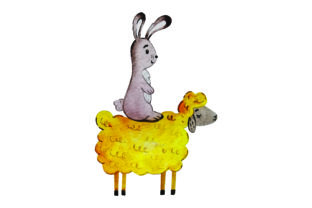
The composition is simple but effective. A round, fluffy bunny sits comfortably on the back of a sheep, and the two look like they are off on a little adventure. The lines are soft, the edges feathered, and the overall silhouette is approachable. It does not scream for attention. It invites a closer look. For a craft business owner or an Etsy seller, that kind of quiet charm is gold. It makes customers pause, tilt their head, and smile. That is the exact moment a casual browser turns into a buyer.
First Impression and Emotional Pull
What hits me immediately is the mood. This is not a loud Easter graphic with neon eggs and frantic patterns. It is calm, storybook, and tender. The watercolor effect gives it a dreamy quality that works beautifully for nursery decor, baby gifts, and soft apparel. It feels like something you would find in a high-end boutique that sells handmade baby blankets or organic cotton onesies. That is the niche this design was born for.
From a designer’s perspective, the shape is friendly to embroidery. The bunny and sheep form one connected mass, which means fewer jump stitches and a cleaner stitch path if the digitizing is done thoughtfully. The lack of sharp corners and tiny isolated elements is a relief. It reduces the risk of thread breaks, misalignment, and puckering. I can already see this running smoothly on a medium-weight cotton or linen.
Real-World Project Scenario
Let me walk you through a real project I planned with this design. A client asked me to create a custom baby shower gift, a hooded towel with an embroidered accent on the corner. The theme was gentle woodland animals, and the nursery colors were sage green, cream, and dusty blue. I needed something unique, not another generic bear or bunny alone. The Bunny Riding a Sheep – Watercolor design was the perfect fit. It added a touch of whimsy without being cartoonish, and the watercolor style matched the soft, organic feel of the nursery.
I tested it first on a scrap of the same terry cloth. The looped texture of the towel was a challenge, but with a water-soluble topper and a medium-weight cutaway stabilizer, the stitches settled beautifully. The watercolor effect translated into a soft, blended look that almost felt like a painting on fabric. The client cried when she saw it. That is the kind of reaction a well-chosen design can trigger.
Where This Design Shines Brightest
After testing it on multiple surfaces, I can confidently say the Bunny Riding a Sheep – Watercolor design excels on products that benefit from a soft, emotional touch. Think baby clothes, toddler sweatshirts, nursery pillow covers, and personalized blankets. It also works wonderfully on tote bags, especially those made from natural cotton or canvas. The gentle aesthetic makes it a strong candidate for Easter gifts, but honestly, it is not limited to a single season. The sheep and bunny motif is timeless enough for year-round use in children’s products.
For Etsy sellers and small shop owners, this design opens up a range of listing opportunities. You can offer it on a baby onesie for a spring baby shower, a kitchen towel for a farmhouse Easter basket, or a zip pouch for a child’s small treasures. The versatility is there, and the watercolor style gives it a handmade look that customers love. It pairs beautifully with soft pastel thread palettes and light fabric backgrounds.
Fabric and Surface Considerations
Not every fabric will be kind to this design. The watercolor texture relies on subtle tonal shifts and soft edges. If you stitch it on a dark fabric, those delicate details may get lost. I recommend testing it on cream, soft white, pale pink, mint, or light gray backgrounds. The contrast needs to be gentle, not harsh. A dark navy sweatshirt will swallow the nuance and leave you with a flat, disappointing result.
Stretchy fabrics require extra care. A onesie or a t-shirt made from ribbed cotton can distort the design if the stabilizer is not sufficient. I use a no-show mesh stabilizer on knits, and I always baste the fabric to the stabilizer before stitching. This prevents shifting and keeps the watercolor edges crisp. Thick fabrics like fleece or Sherpa are tricky because the pile can bury the fine details. A topper is essential here, and I prefer a lightweight tear-away on top to keep the stitches from sinking.
Small Hoop and Detail Challenges
If you are working with a smaller hoop, you need to pay attention to the scale. The Bunny Riding a Sheep – Watercolor design has a connected shape, which is helpful, but if you shrink it too much, the facial features and the watercolor texture may become muddy. I tested a version at three inches wide, and while it was still recognizable, the inner details lost some clarity. I would not go below four inches for this design if you want the watercolor effect to read clearly. For a cap or a small patch, consider using only the bunny silhouette or simplifying the fill, though that would require manual editing.
Stitch Quality and Visual Appeal
The watercolor style is a design choice that affects how the finished embroidery looks. Unlike a flat vector filled with solid blocks of color, the watercolor approach uses layered, translucent-looking washes. In embroidery, this means the digitizer must use a combination of fill stitch with varying densities, and possibly some running stitch accents to simulate brush strokes. The result, when done well, is a textured, painterly surface that catches light differently at every angle. It feels organic and alive, not machine-made.
This visual quality increases the perceived value of the finished product. A customer who sees a watercolor-style embroidered bunny on a tote bag does not think “mass-produced.” They think “artisan.” That perception builds trust and encourages repeat purchases. It also gives you, the maker, a stronger brand story. You are not just selling a towel with an animal on it. You are selling a piece of gentle storytelling.
Customer Response and Giftability
I have learned over the years that certain designs make people reach for their wallets faster than others. Designs that evoke tenderness, childhood, and simple joy are in that category. The Bunny Riding a Sheep – Watercolor design taps into all three. It makes a perfect gift because it feels personal and thoughtful. A grandmother buying a handmade bib for her new grandchild is not looking for something edgy or trendy. She wants something that says “I love you” in stitches. This design delivers that message with quiet confidence.
For a craft business, the giftability factor is huge. Products featuring this design photograph well, package beautifully, and attract comments at craft fairs. I have seen customers pick up a pillow cover with a similar watercolor animal design, hold it to their chest, and say, “This is so sweet.” That reaction is worth more than any advertising budget.
Practical Designer Notes and Testing
Before you list a finished product or use this design on a client order, do your homework. I always test a new embroidery file on scrap fabric first. Choose a fabric similar to your final product. Check the thread color contrast carefully. The watercolor effect depends on subtle gradients, so pick thread colors that are close in tone rather than starkly different. I use a soft taupe, dusty rose, sage, and cream palette for a cohesive look.
Review the stitch density. A watercolor design can become overly dense if the digitizer tries to replicate every brush stroke. Too much density leads to stiff fabric, thread breaks, and a bulky feel. Run a test stitch and feel the back of the fabric. If it is thick and rough, you may need to adjust the density or choose a lighter stabilizer. Also, test the design in black and white. A good design should hold its shape and be recognizable even without color. This is especially important if you plan to print a mockup or a catalog page.
Licensing and Commercial Use
The product description states that you receive the Bunny Riding a Sheep – Watercolor design in SVG, Transparent PNG, EPS, and DXF formats. These are versatile digital assets that can be used for printable mockups, sublimation, and design previews, not just machine embroidery. However, before you sell finished products or digital items, confirm the licensing terms. The formats provided suggest commercial flexibility, but you must verify what is allowed. Some designers permit full commercial use on physical products, while others restrict digital resale. A quick check of the license can save you from legal headaches later.
For embroidery specifically, you will need an embroidery file format compatible with your machine. The SVG and EPS files are source files, not stitch files. You will need to digitize the design or convert it using embroidery software. Factor that into your workflow. If you are not comfortable digitizing watercolor textures, consider hiring a professional digitizer who understands how to translate soft washes into satin stitch, fill stitch, and running stitch combinations.
Where Careful Use Is Required
While the design is versatile, there are surfaces where I would pause before using it. Caps and hats with curved surfaces can distort the watercolor edges. The rounded shape of the design may not sit well on a structured crown. Patches are possible, but the soft edges may lose their charm when trimmed to a sharp border. Thin fabrics like lightweight jersey or sheer linen can pucker under the stitch density required for watercolor effects. Use a heavy-duty stabilizer and test before committing.
Products that require frequent washing, such as bibs, burp cloths, and kitchen towels, need a dense but not overly thick stitch. The watercolor texture should not come at the expense of durability. A satin stitch border around key elements can help the design survive repeated laundering. I also recommend using polyester thread for items that will be washed often, as it holds color and resists fraying better than rayon.
Final Thoughts From the Worktable
After multiple test runs and a few finished projects, I can say the Bunny Riding a Sheep – Watercolor design earns its place in my embroidery library. It fills a specific need for soft, storybook-style designs that appeal to parents, gift shoppers, and boutique buyers. It is not a design for every occasion, but for the right project, it is memorable, professional, and full of heart. I have already added it to my spring collection lineup, and I expect it will be a steady seller during the Easter season and beyond.
If you are a maker who values emotional connection over flashy graphics, this design is worth testing. Take your time with the stabilizer, choose your fabric wisely, and let the watercolor texture speak for itself. The result, when done right, is a product that feels less like a commodity and more like a keepsake.